Outdoor Guide Training

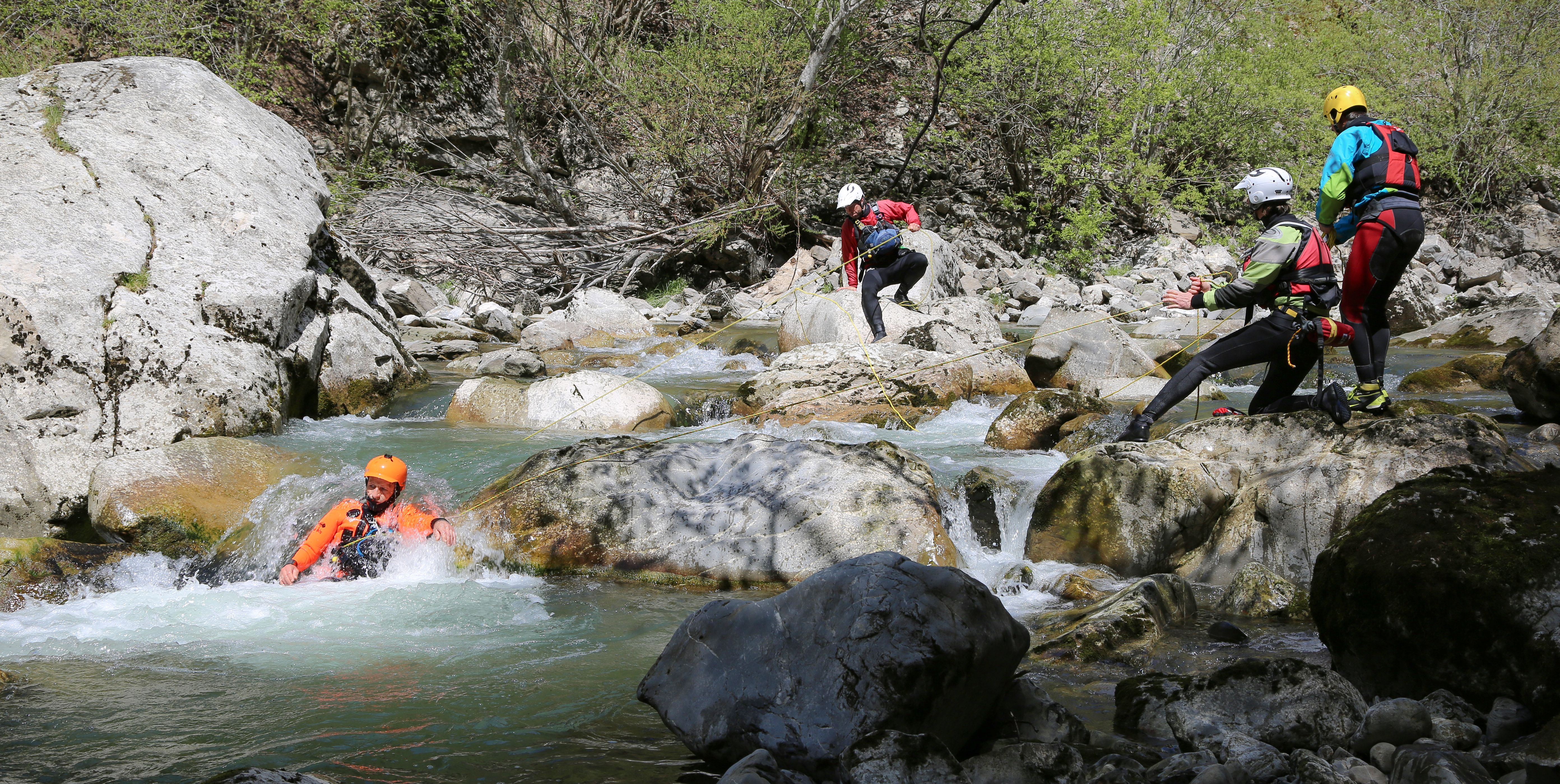
People with helmets and wetsuits canyoning in a river, one person with a rope helping.
People in an inflatable boat doing whitewater rafting, wearing helmets and life jackets, rocks.
SOA Basic Certificates
Rescue3 Training
Clear Structure

Season:

May August

Key info

Our guides speak German & English
Canyoning Basics and Advanced Course in two modules
River Rafting Basic Course with training days and exam
Rescue3 Whitewater Rescue with three days of intensive training
Rope Park Operator with hands-on rope activities

Overview

Recommended for: Anyone ready to level up with the skills that actually matter.

You'll learn step-by-step how to safely lead people through nature experiences.

The Outdoor Academy guides you through a structured training program with clear modules in rafting, canyoning, and rope activities. You'll learn techniques, practice them in water and on rocks, and later apply them in real situations. The training combines theory, practice, and guided experience into a comprehensive learning path.

Course details

Academy

Learning objectives

  • SOA River Rafting Guide 1
  • SOA Canyoning Guide 1
  • SOA Rope Park Operator
  • Rescue 3 WRT PRO

Course curriculum

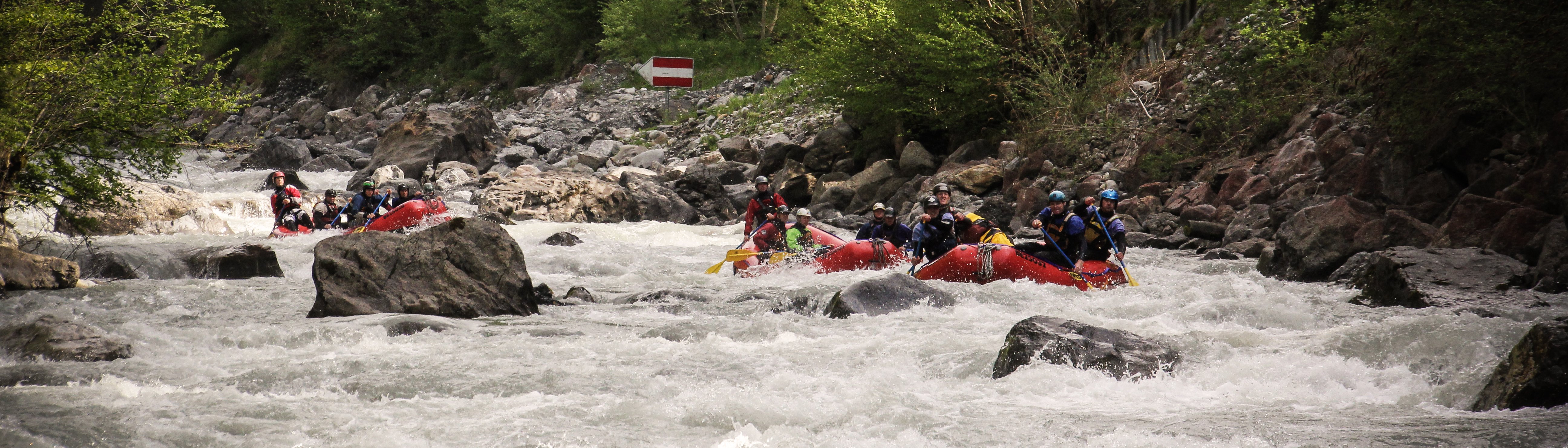
People in red inflatable boats rafting on a river, wearing helmets and life jackets.

Deepen your expertise in river rafting according to SOA standards. Focus on paddling and steering techniques, hydrodynamics, equipment knowledge, safety, and rescue in whitewater up to Class III. Learn to lead a raft with a crew, assess dangers, and execute rescue procedures.

T1
Paddling and Steering Techniques
  • Learn to control a raft and effectively use the crew.
Key points:
  • Paddle grip, forward and backward stroke
  • Stroke rhythm, power and weight distribution in the boat
  • Role of the guide and crew in the boat
  • Steering techniques with commands and guide paddle
T2
Hydrodynamics and Paddling Strategy

Read the water, choose paddling lines, and adjust your strategy to the current and obstacles.

Key points:
  • Identify main current, eddies, waves, rollers
  • Hazards like recirculations, undercuts, obstacles
  • Offensive and defensive paddling with and against the current
  • Paddling in convoy and positioning in formation
T3
Safety, Rescue, and Teamwork

Implement safety principles and rescue techniques on the river.

Key points:
  • Safety talk, equipment check, behavior on the boat
  • Behavior during capsizing, wrapping, and obstacles
  • Use of throw bags and other rescue tools
  • Emergency management, alerting, communication

People with helmets and wetsuits canyoning in a rocky riverbed in the mountains.

Develop the technical foundations for the SOA Canyoning Guide 1. Focus areas include rope and climbing techniques, water and movement techniques, equipment, environment, first aid, and leadership and safety management in the canyon.

T1
Rope and Climbing Techniques in the Canyon

Move safely in rocky terrain and set up simple rope systems for abseiling points.

Key points:
  • Basic knots and canyoning-specific knots
  • Roping, anchor building, rope handling, and redundancy
  • Moving in easy climbing terrain, climbing up to about grade 4
  • Climbing back to anchors for assistance
T2
Water Techniques and Movement in the Canyon

Read water currents in the canyon and adjust your behavior in pools, slides, and jump spots.

Key points:
  • Flow forms, obstacles, and underwater issues
  • Assessing slides, jumps, and pools
  • Rope techniques in moving water and releasing at the right moment
  • Water rescue maneuvers with throw bag and direct rescue
T3
Equipment, Environment, and Leadership

Use canyoning-specific equipment correctly and plan tours considering environment, safety, and group dynamics.

Key points:
  • Assembling and maintaining guest and guide equipment
  • Geology, hydrology, meteorology, and their impact
  • Environmental behavior, local regulations, and canyoning guidelines
  • Tour planning, safety measures, role of the responsible guide

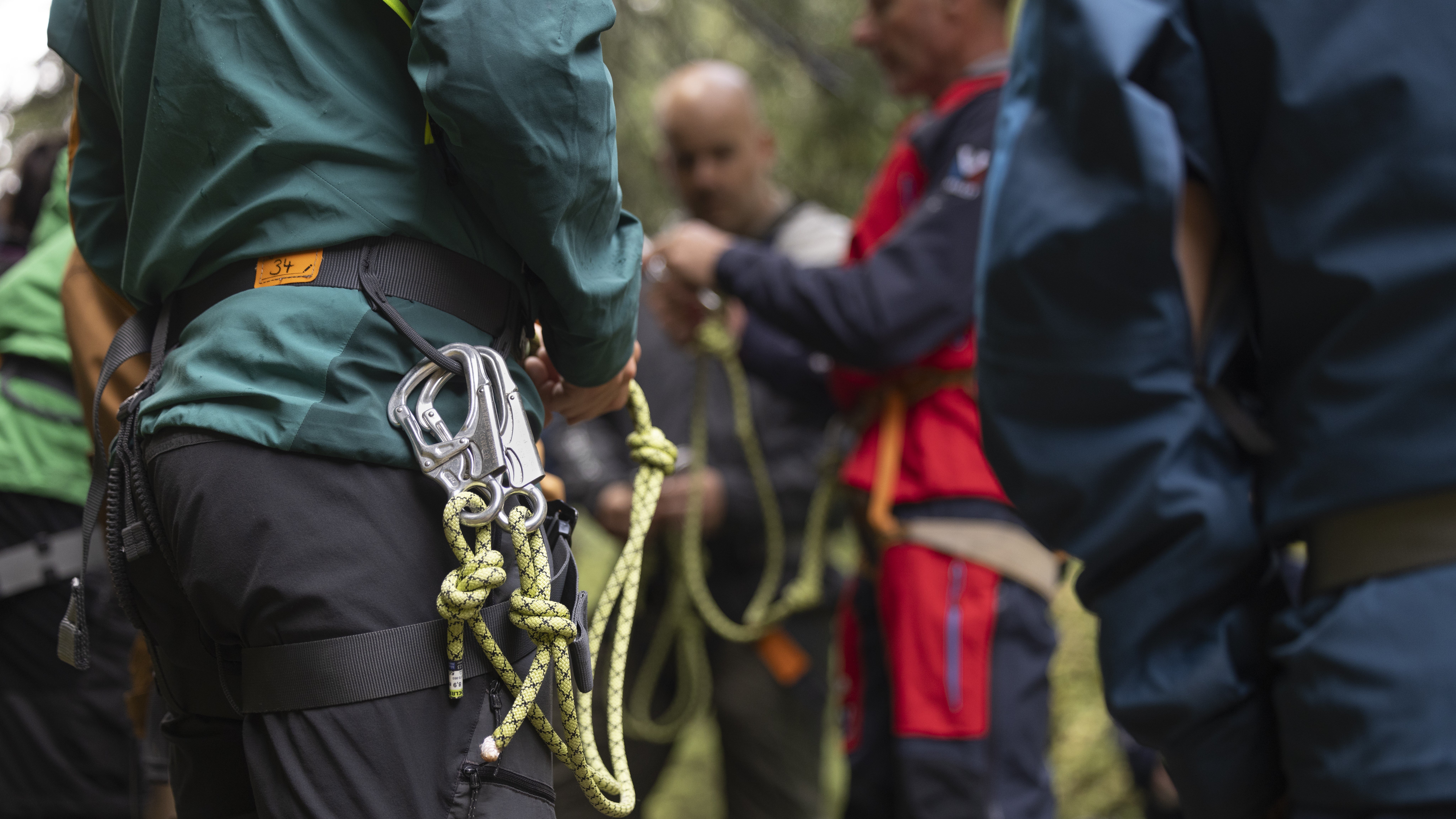
People with climbing harnesses and ropes in the forest, focusing on safety equipment.

Prepare for the qualification as an SOA Rope Park Operator. Learn to understand equipment and safety systems, instruct guests, and conduct simple rescues and technical inspections in rope parks and similar facilities.

T1
Equipment and Safety Systems

Understand the setup, function, and limits of systems used in rope activities.

Key points:
  • Equipment for guests and guides in rope parks
  • Personal protective equipment and gloves
  • Setup of typical safety systems and anchors
  • Systematic inspection and documentation
T2
Guest Instruction and Course Supervision

Conduct clear briefings and accompany guests on the ground and at height.

Key points:
  • Structured briefing and trial sequence
  • Recognizing insecurity, overload, and misuse
  • Handling children, families, and groups
  • Communication in clear language and calm tone
T3
Rescue Techniques and Technical Inspection

Implement basic rescue techniques on rope courses and perform simple technical inspections.

Key points:
  • Standard procedures for blockages and technical failures
  • Role distribution in the rescue team
  • Technical inspection of courses and safety points
  • Documentation of incidents and measures

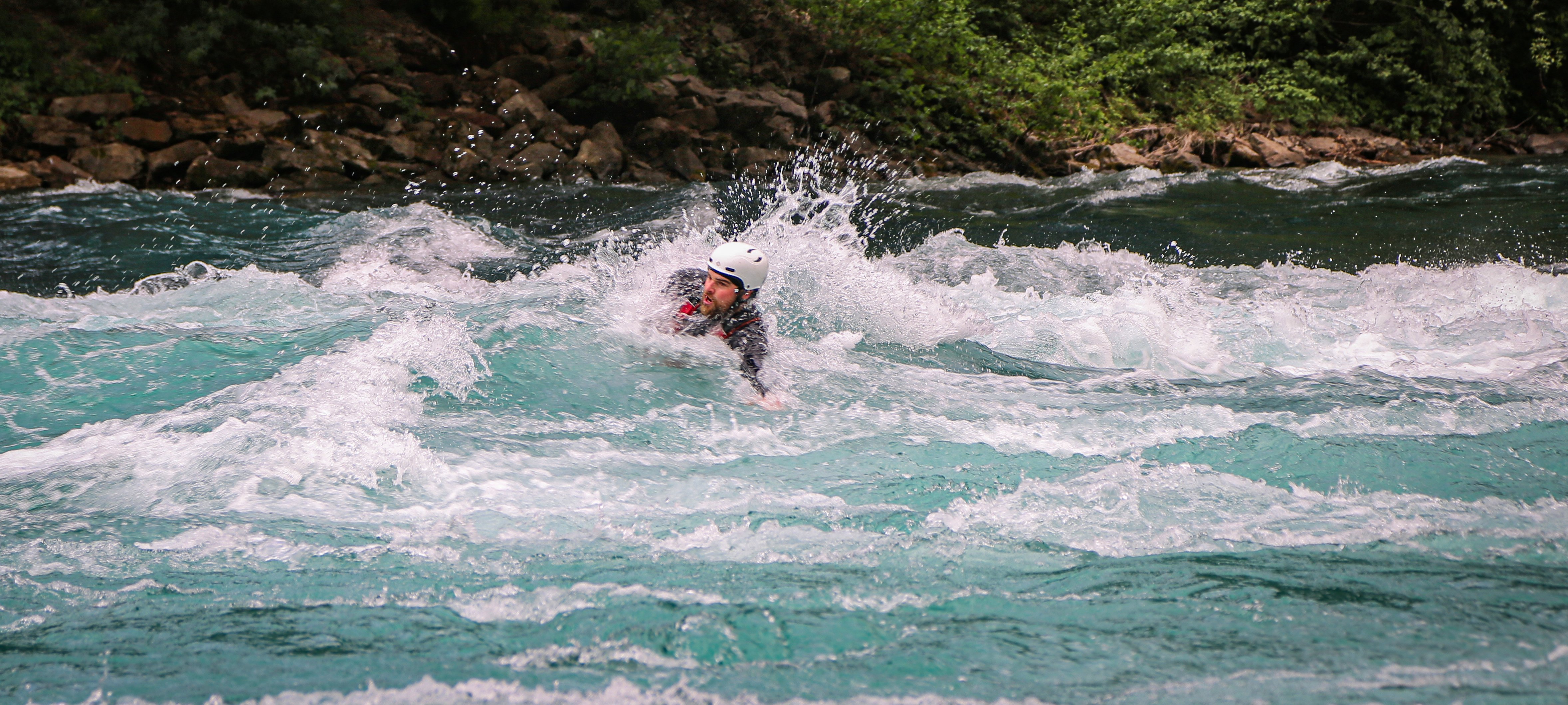
Person in a wetsuit and helmet is swimming in the whitewater river, surrounded by trees and rocks.

Gain in-depth knowledge in water rescue and emergency management through the Whitewater Rescue Technician WRT PRO course. Focus on Rescue 3 philosophy, situation assessment, tactical approach, and practical rescue techniques with and without technical aids.

T1
Emergency Management and Situation Assessment

Structure emergencies on the water and make informed decisions.

Key points:
  • Rescue 3 principles and safety philosophy
  • Risk analysis in dynamic environments
  • Roles and communication in the rescue team
  • Alerting, reporting protocol, and interface with rescue services
T2
Rescue Techniques in Whitewater

Apply practical rescue techniques in various scenarios.

Key points:
  • Throw bag rescues for swimmers and stranded individuals
  • Rescue from entrapments and blockages
  • Rope crossings, rope diagonals, and boat rescues
  • Self-protection and abort criteria during operations
T3
Medical and Organizational Basics

Combine basic medical considerations with your role as a first responder in outdoor operations.

Key points:
  • Typical injury patterns in whitewater areas
  • Limits of your medical competencies
  • Documentation for rescue services and authorities
  • Importance of preparation and prevention

Assessment methods

SOA River Rafting Guide 1

After passing the practical and theoretical exams, you qualify as a River Rafting Guide 1. This allows you to work as a guide or assistant on suitable rivers and later advance to SOA River Rafting Guide 2. Issued by Outdoor Switzerland AG.

SOA Canyoning Guide 1

This certification shows you can safely co-lead canyoning tours under the responsibility of a more qualified guide. It forms the basis for advanced courses like SOA Canyoning Guide 2, SOA Rope Specialist, and SOA Trip Leader. Issued by Outdoor Switzerland AG.

SOA Rope Park Operator

This certificate confirms you can professionally supervise rope activities, instruct guests, and perform simple rescues in rope parks. It opens up opportunities in rope parks and similar facilities and serves as a foundation for further rope and rescue training. Issued by Outdoor Switzerland AG.

Rescue 3 Whitewater Rescue Technician WRT PRO

This internationally recognized certificate confirms your competencies in water rescue, emergency management, and tactical operations in whitewater. It is a standard requirement in many areas of whitewater sports. Issued by Outdoor Switzerland AG in collaboration with Rescue 3.

Certification

The Swiss Outdoor Association SOA is the national authority for certifications in various outdoor activities and represents the industry in Switzerland. In many areas, an SOA qualification is a prerequisite to work as a guide. The standards are internationally recognized. Rescue 3 is an international organization and its certificates are accepted worldwide.

Issued by:
Outdoor Switzerland AG

Itinerary

Meeting points
Introduction and Basics

At the beginning, you'll clarify organization, safety, and your role in the guide team. You'll get to know the equipment, workflows, and standards. This foundation ensures you are prepared to start the practical modules.

Modular Structure with Final Exams

The course is divided into clearly separated modules. Each module is completed and ends with an exam before you move on to the next. You first work on the technical basics, take the corresponding SOA or Rescue 3 exam, and build on that. This process ensures you are properly qualified step-by-step before taking on new areas of responsibility.

Targeted Practical Application

Between the modules, you gain practical experience on tours. You support active guides, take on your own sections, and apply standards in real environments. This deepens your technique, communication, and decision-making skills.

Completion and Future Prospects

Upon successfully passing all exams, you receive qualifications as an SOA River Rafting Guide 1, SOA Canyoning Guide 1, SOA Rope Park Operator, and Rescue 3 WRT PRO. After the training, you can work in outdoor and other companies as an assistant or guide, accumulate practice days, and advance to higher levels such as Guide 2, Rope Specialist, or Trip Leader.

Whats included

10 week training program
Course documents
Accommodation in fully equipped apartment
Transport during the courses
Required equipment
Certified canyoning rafting and rope park instructors
Coordination and support
Licensing fees and certificates upon completion

Not included

Insurance

Participants are not insured by the organizer and need valid accident and travel insurance.

What to bring

Swimwear and towel
Travel documents
Toiletries and medication
Solid waterproof shoes
Personal clothing for all conditions including robust outdoor wear

Weather info

General weather info

Weather can influence any tour, and a clear decision is often only possible on the day itself. We review conditions carefully and remain within our safety limits, and bad weather alone does not mean we have to stop.

Make sure we can reach you with current contact information in case your booking changes. Silence from us means your tour is still planned or the final call is not yet made. If we need to cancel, you can rebook, choose another activity, or get a full refund.

For detailed advice on how to prepare for (and enjoy!) bad weather days in Interlaken, check out our weather blog 

Meeting points

Meeting points
Activity location

You might also like